How CRWI\'s Grievance Redressal Cell is reimagining safeguarding, accountability, and accompaniment for religious life in India
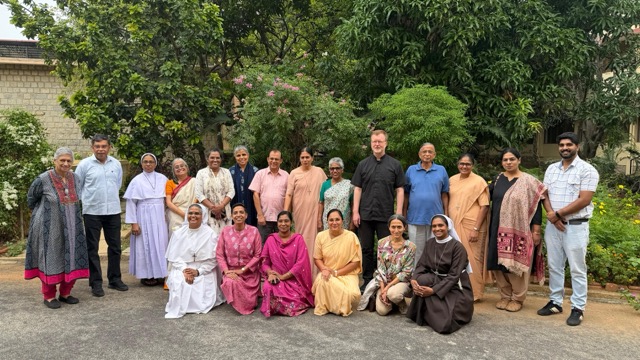
From 31 May to 2 June 2026, the Grievance Redressal Cell (GRC) of the Conference of Religious Women India (CRWI) gathered its members, SRWI collaborators, advisory members, and safeguarding resource persons, for its Annual Meeting — three days that became far more than a routine review.
What emerged instead was a searching, honest reckoning with where the GRC stands today, and a bold roadmap for where it needs to go: toward safer communities, stronger grievance redressal mechanisms, real accountability, and a culture rooted in Gospel values, justice, transparency, and human dignity.
As one presenter put it, the meeting reaffirmed that safeguarding is not merely an institutional policy requirement — it is a shared mission of the Church, calling for continual vigilance, compassionate accompaniment, structural accountability, and an unwavering commitment to the dignity of every person.
Here is a full look inside the three days.
Day One — 31 May 2026: Reflection, Evaluation, and Visioning the Future of GRC
The opening day was dedicated to looking honestly at the GRC\\\'s journey so far its origins, its impact, its limitations and to imagining what it could become.
Session 1: A Commentary on Grievance Redressal Mechanisms and Fostering Safe Communities
Presenter: Mrs. Anita Cheria
Mrs. Anita Cheria set the tone with a comprehensive review of grievance redressal mechanisms within religious communities and the critical role the GRC plays in building safe, accountable spaces.
She traced the Cell\\\'s origins back to repeated, difficult conversations about abuse, silence, exclusion, and discrimination and the painful absence of accessible mechanisms through which women religious could seek support, accompaniment, and justice. Drawing on field experience, stakeholder consultations, and CRWI\\\'s own landmark study, \\\"High Time: Women Religious Speak Up on Gender Justice in the Indian Church,\\\" she made the case for a decisive shift: from a culture of silence toward one of dialogue, transparency, healing, and accountability.
The session did not shy away from naming hard truths. Participants acknowledged serious concerns raised by women religious themselves, including:
• Abuse of authority and power imbalance
• Fear of retaliation and victimization
• Lack of trust in existing structures
• Patriarchal attitudes
• Insufficient mechanisms for listening and healing
• Challenges faced by survivors in seeking justice
Mrs. Anita\\\'s central message was one of measurement and meaning: the GRC\\\'s effectiveness should never be judged simply by the existence of policies and procedures on paper, but by whether grievances are genuinely heard, addressed, and resolved. As she reminded participants, community acceptance and trust remain the truest indicators of whether the GRC is actually working.
Strengthening communication, transparency, and documentation. A major recommendation was to build a stronger communication strategy to boost awareness, credibility, and accountability — including publishing anonymised case studies while protecting confidentiality, sharing yearly statistics on the GRC\\\'s work, providing periodic updates on cases handled and remedies provided, strengthening documentation standards, developing structured reporting mechanisms, and involving GRC members directly in CRWI\\\'s project documentation and reporting. Transparent communication, the session noted, is what builds the trust that encourages more people to come forward.
A GRC newsletter. To deepen engagement and visibility, the meeting proposed launching a bi-monthly GRC newsletter, with rotating editorial responsibility among GRC members. Envisioned content includes highlights from GRC meetings, safeguarding training calendars, completed programmes, personal reflections, participant experiences, messages from bishops and Church leaders, and contributions from congregations — a shared platform for learning, awareness, and collective responsibility.
Increasing visibility and accessibility. Participants agreed the GRC needs a stronger presence within Church structures generally through representation at CRWI conferences and gatherings, ethics/POSH committees at major CRWI events, GRC members serving as external committee representatives, and deliberate efforts to draw in novices and younger religious. Visibility, the session affirmed, is essential to building confidence in the Cell.
Creating safe spaces and strengthening survivor support. Safeguarding, participants agreed, must translate into practical support audits of available safe spaces, identification of emergency shelters, access to counselling and medical assistance, accompaniment and emotional support, and networks of trusted listeners who can walk alongside individuals even before a formal complaint is ever filed.
Listening to vulnerable voices. Mrs. Anita stressed that the GRC must remain, first and foremost, a listening body — continuously consulting novices, formators, sisters outside leadership roles, survivors, complainants, and other vulnerable groups within communities, so that the Cell stays relevant and responsive to the realities of the people it exists to serve.
Networking and collaboration. The session closed with a call for stronger ties to existing Church and civil society initiatives — including collaboration with organizations such as Streevani, the creation of safeguarding hubs across all 14 CRI regions, and complementarity with other Church safeguarding structures. The vision: safeguarding work across CRWI, congregations, and Church institutions functioning together, not in isolation.
Mrs. Anita concluded by reminding participants that the ultimate goal of the GRC is to replace silence with agency, fear with dialogue, exclusion with accompaniment, and injustice with dignity.
Session 2: Envisioning the GRC as Part of CRWI Safeguarding Initiatives
Presenter: Sr. Mary Scaria SCJM
Sr. Mary Scaria widened the lens, presenting a comprehensive vision for situating the GRC within CRWI\\\'s broader safeguarding mission. Her core argument: safeguarding needs more than prevention programmes. It needs robust systems of reporting, accompaniment, healing, accountability, and long-term institutional transformation.
The session reaffirmed a collective commitment that will anchor the GRC\\\'s work going forward:
\\\"While acknowledging past failures, we commit ourselves to ZERO TOLERANCE, continual vigilance, full legal compliance, institutional accountability, and the promotion of a culture of care rooted in justice, transparency, and respect for human dignity.\\\"
The GRC framework itself was framed around seven guiding principles: confidentiality, accessibility, compassion, impartiality, timely response, non-retaliation, and survivor-centered accompaniment.
A short-term implementation plan (0–12 months). Sr. Mary laid out concrete, near-term steps to strengthen the GRC\\\'s structure:
• Establishment of 14 Regional GRCs
• Appointment of regional focal persons
• Creation of confidential reporting systems
• Dedicated helpline support
• WhatsApp-based reporting mechanisms
• Email reporting channels
• An online anonymous complaint portal
• A complaint tracking system
• Systematic documentation processes
• Documentation of safeguarding practices and GRC case learnings
The throughline across all of these: making grievance redressal more accessible, more responsive, and more accountable.
A long-term safeguarding roadmap. Looking further ahead, the presentation sketched a wider vision for a sustainable safeguarding ecosystem expanding GRC access to all congregations and institutions; mandatory awareness programmes for Major Superiors and Bishops; support for congregations developing their own safeguarding policies; the establishment of safeguarding and rehabilitation centres; a dedicated safeguarding resource hub; training for more men religious; strengthened Train-the-Trainer programmes; partnerships for congregation-specific safeguarding frameworks; annual impact assessments and transparency reports; a three-year implementation roadmap; diploma courses in safeguarding; regional monitoring units; digitized grievance tracking; and phase-wise execution milestones.
The message was unambiguous: safeguarding must become woven into formation, leadership, governance, and mission not treated as a separate compliance exercise.
Session 3: Effectiveness of the GRC and the Need to Preserve It
Presenter: Sr. Rushila Rebello
Closing out Day One, Sr. Rushila Rebello turned to a pointed question: is the GRC actually working, and how do we make sure it endures?
She located the Cell\\\'s unique value in its independence its ability to operate outside the immediate authority structures of complainants and respondents, giving individuals a way to seek help without fear of rejection, retaliation, or victimization. The GRC\\\'s core strengths, as identified in the session, are its capacity for accompaniment and mediation, confidentiality, compassionate listening, justice-oriented responses, protection of survivor dignity, whistleblower protection, and transparency and accountability.
Recommendations for strengthening the GRC. Participants called for mandatory, recurring GRC training for congregations; outreach to ensure every congregation is reached through GRC awareness initiatives; and awareness programmes specifically tailored for male religious, dioceses, and formation houses. A recurring theme was the need to clearly define the GRC\\\'s jurisdiction, particularly in contexts where Internal Committees (ICs) already exist alongside it.
Institutional strengthening measures. The session also pushed for mobilizing resources and building expert networks — legal professionals, counsellors, medical experts, human rights lawyers, and social activists among them. Participants candidly acknowledged that the GRC currently lacks enforcement authority, and recommended further reflection on what appropriate enforcement mechanisms might look like. Other proposals included a formal SWOT analysis for institutional strengthening, measurable goals and outcomes, a Learning Management System (LMS), stronger institutional accountability overall, and a requirement for GRC members to sign Non-Disclosure Agreements (NDAs) to reinforce confidentiality and trust.
Day Two — 1 June 2026: Safeguarding as Spirituality and Mission
The second day\\\'s centerpiece was a keynote from internationally recognized safeguarding expert Fr. Hans Zollner SJ, whose session reframed the entire conversation around safeguarding — not as an administrative add-on, but as a spiritual calling.
Formation: The Current Safeguarding Situation Worldwide and Its Specific Implications for Religious Life
Presenter: Fr. Hans Zollner SJ
Fr. Hans offered a global perspective on safeguarding realities within the Church today, and what they mean specifically for religious life. His central claim: safeguarding is not an additional responsibility layered onto ministry it is an essential expression of Christian discipleship, spirituality, and mission itself.
He framed safeguarding as a call for the Church to become a place of listening, healing, accountability, compassion, and conversion.
The session ranged widely across global safeguarding developments, human formation, psychosexual maturity, healthy relationships, the abuse of power, and the many forms abuse can take — emotional, psychological, and spiritual, not only physical. Fr. Hans also addressed a subject too often left unspoken: safeguarding fatigue, and the importance of self-care for those doing this demanding work, alongside the ongoing need for transparency and accountability at every level.
His conclusion tied formation, leadership, community living, spirituality, and everyday ministry together as a single fabric — reminding participants that safeguarding begins with recognizing the image and dignity of God present in every human person, especially the vulnerable and the wounded.
Day Three — 2 June 2026: Deliberations, Planning, and the Way Forward
The final day turned from reflection to action consultation, planning, and strengthening the collaboration between the GRC, SRWI, and regional structures.
Discussions centered on governance and coordination, regional safeguarding mechanisms, roles and responsibilities, communication systems, documentation processes, sustainable resource development, reporting structures, and monitoring and evaluation.
Participants closed the meeting by reaffirming the need for stronger regional collaboration, clearer mandates, accountable systems, measurable outcomes, continued training, and transparent communication the practical scaffolding that will carry the ambitions of the previous two days forward.
Conclusion: A Lived Culture, Not Just a Policy
The Annual GRC Meeting 2026 marked a significant moment of renewal, commitment, and strategic direction for CRWI\\\'s safeguarding mission.
Above all, the gathering reaffirmed a simple but demanding truth: safeguarding cannot remain limited to policies or documents sitting in a file. It must become a lived culture — reflected in relationships, leadership, formation, governance, and the daily rhythm of community life.
The way forward calls for a Church where:
Silence is replaced by dialogue, fear by trust, isolation by accompaniment, and suffering by justice and healing.
Through strengthened structures, deeper collaboration, real accountability, and compassionate presence, the GRC renews its commitment to building religious communities where every person especially the vulnerable, the wounded, and the unheard can experience dignity, safety, and hope.
The Grievance Redressal Cell (GRC) is an initiative of the Conference of Religious Women India (CRWI), dedicated to fostering safe, accountable, and dignity-affirming communities for women religious across India.