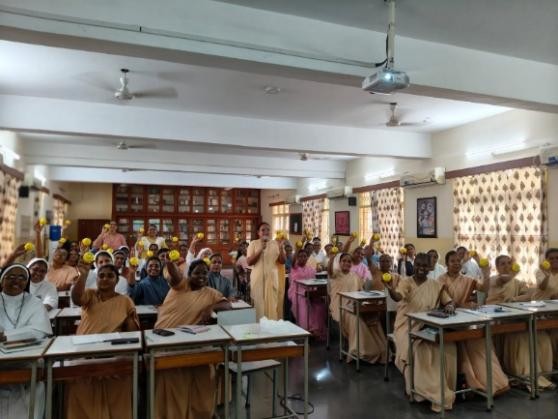
The Formators' Workshop on Safeguarding, titled “Together for Safe and Life-Giving Formation Communities,” was conducted byConference of Religious Women India (CRWI) in collaboration with its unit Safeguarding Religious Women India (SRWI) from 15th –19th September 2026 in Hyderabad. The five-day programme brought together 40 formators serving in religious formation houses in India to deepen their understanding of safeguarding and strengthen their capacity to create safe, nurturing, and accountable formation communities.
Objectives of the Workshop
- To deepen understanding of safeguarding as a Gospel-centred commitment to protecting human dignity, preventing abuse, promoting healing, and ensuring safe and life-giving formation communities.
- To strengthen the knowledge and skills of formators in identifying, preventing, and responding appropriately to various forms of abuse, including emotional, psychological, physical, spiritual, sexual, and digital abuse.
- To promote healthy and responsible formation practices by fostering gender sensitivity, emotional and psycho-sexual maturity, healthy boundaries, respectful relationships, and the responsible exercise of authority.
- To equip formators to develop and implement effective safeguarding measures in their formation houses through safeguarding policies, codes of conduct, accessible reporting mechanisms, risk assessment, accountability, and ongoing formation.
The workshop opened with prayer, the lighting of the lamp, and a welcome address by Sr. Molly Mathew, who emphasized the vital role of formators in building safe communities. Participants were introduced to CRWI's four units —Institute Mater Dei (IMD), Grievance Redressal Cell (GRC), Centre for Research on Religious Life India (CERRI), and Centre for Innovations and Initiatives (CIIRI)—which collectively promote leadership, research, grievance support, and community empowerment.
The first day focused on understanding safeguarding from the Biblical perspective. Participants reflected on the inherent dignity of every person created in the image of God and explored safeguarding as a commitment to protection, prevention, partnership, and accountability. Sessions examined the influence of culture, authority, obedience, gender, and communication in formation settings, encouraging formators to become cultural bridges through listening, discernment, protection, empowerment, and referral.
Different forms of abuse—including emotional, psychological, physical, and grooming behaviours—were discussed through practical case studies. The day concluded with spiritual conversation and the screening of “Spotlight”, inviting reflection on institutional responsibility and accountability.
The second day highlighted the importance of healthy accompaniment rooted in love and respect. Themes of Gender Justice, encouraging women religious to recognize their dignity, address unequal power relationships, and strengthen gender-sensitive formation were considered.
The Grievance Redressal Cell (GRC) its purpose, procedures, confidentiality, and supportive role in handling grievances was taken up. Participants applied these principles through group discussions on practical cases.
Sessions on Prevention of Sexual Harassment of Women at Work Place (POSH) and Protection of Children from Sexual Offences (POCSO) strengthened participants' legal awareness regarding workplace harassment and child protection. Research findings presented by Sr. Molly Mathew highlighted the importance of social support, accompaniment, and ongoing formation in promoting the well-being of women religious.
The third day explored responsible leadership through the Church document Vos Estis Lux Mundi (2023), emphasizing accountability and compassionate responses to safeguarding concerns.
Sessions addressed intrafamilial abuse, warning signs of trauma, emotional maturity, and the need for healthy boundaries. Cyber and Digital Safety focused on the challenges faced by Generation Z, including cyberbullying, online grooming, misuse of social media, and digital exploitation.
A significant session on Psycho-Sexual Integration and Healthy Sexuality presented celibacy as the integration of sexuality rather than its denial. Participants reflected that authentic formation leads from dependence to responsible freedom and that boundaries are not barriers to love. The day ended with the film “Precious”, highlighting resilience, healing, and the transformative power of compassionate relationships.
The fourth day examined spiritual abuse as the misuse of religious authority, Scripture, or vocation to manipulate or control others. Participants reflected on Jesus' healing ministry as a model of accompaniment that restores dignity and freedom.
Another important session identified red flags in formation, such as withdrawal, fear, isolation, secretive communication, and unexplained behavioural changes. Formators were reminded that their role is to listen, document, report, and refer rather than investigate.
The day concluded with practical training in risk assessment and risk management, where participants developed safeguarding action plans using a six-step model for identifying, evaluating, and reducing risks within formation communities.
The final day began with the Eucharistic celebration at the Shrine of Don Bosco, Bandlaguda. Sessions focused on best practices in formation houses, introducing the Universal Guidelines Framework (UGF), safeguarding policies, and codes of conduct.
A meaningful session on self-care reminded formators that caring for their own physical, emotional, spiritual, and relational well-being is essential for effective accompaniment and the prevention of burnout.
During the closing ceremony, participants renewed their commitment through a symbolic candle-lighting ceremony, praying to become “safeguards from the heart.” Certificates were distributed to all 40 participants, marking the successful completion of the workshop.
Learning Outcome
The workshop bought out several important insights in creating a safe formation environment:
Safeguarding is a Gospel-centred commitment to protecting human dignity.
Prevention through healthy policies, boundaries, and accountability is more effective than responding after harm occurs.
Formators are called to exercise authority with humility, transparency, and respect for personal freedom.
Listening with compassion is one of the most important safeguarding skills.
Cultural realities, gender sensitivity, psychological maturity, and digital safety must be integrated into formation.
Healthy physical, emotional, spiritual, and digital boundaries protect both individuals and communities.
Ongoing formation of formators and regular self-care are essential for creating life-giving communities.
Safeguarding is a shared responsibility requiring collaboration among congregations, safeguarding personnel, Church structures, professionals, and civil authorities.
The participants drew up Action plans on Safeguarding and Formation to be implemented in their Formation Houses:
Every formation house develops and regularly reviews a contextual Safeguarding Policy and Code of Conduct.
Safeguarding procedures, reporting mechanisms, and GRC contacts be made easily accessible.
Formation programmes to include gender equality, emotional maturity, healthy sexuality, human rights, and responsible relationships
Safe spaces to be created where formees can express concerns without fear of retaliation.
Risk assessment to become a regular practice in formation activities and community life.
Safeguarding to be integrated into the ongoing formation of every religious community and shared across congregations.
In conclusion, the Formators' Workshop on Safeguarding “Together for Safe and Life-Giving Formation Communities” was a deeply enriching journey of prayer, learning, reflection, and professional formation. It reaffirmed that safeguarding is fundamentally about protecting dignity, preventing harm, promoting healing, and exercising authority with compassion and accountability.
Inspired by the Gospel call, “You are the light of the world” (Matthew 5:14), the participants returned to their congregations with a renewed commitment to build formation communities where every person experience safety, freedom, respect, belonging, and the compassionate presence of God.
